Slow Burn Wins: How Prestige TV Turned Patience Into the Ultimate Flex
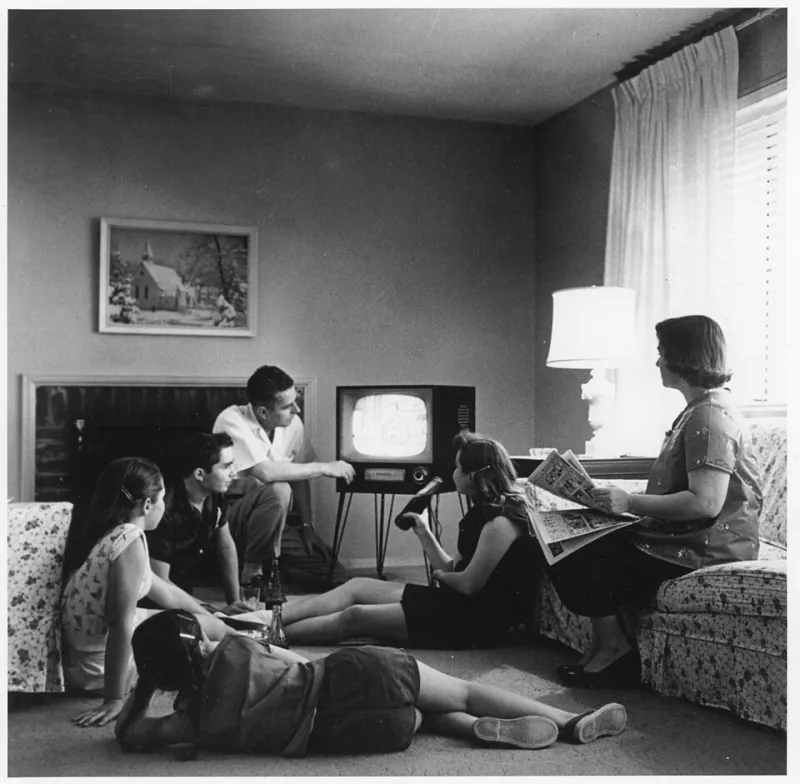
Photo: Evert F. Baumgardner, Public domain, via Wikimedia Commons
Here's a weird thing that's been happening lately. Some of the most buzzed-about shows on streaming aren't the ones that throw a plot twist at you every eight minutes. They're the ones where a character stares out a rain-soaked window for what feels like an uncomfortably long time, and somehow — somehow — you can't look away.
Welcome to the quiet rebellion.
The Algorithm Told Us Faster. Creators Said No.
For years, the conventional wisdom in Hollywood was pretty simple: keep it moving. Streaming data showed viewers dropping off during slow scenes. Executives pushed for tighter cuts, more hooks, more dopamine. The result was a kind of arms race of stimulation — every show trying to out-twist, out-shock, and out-pace the last one.
But something interesting started happening on the other end of that spectrum. Critically acclaimed series like The Bear, Slow Horses, and Severance built enormous cultural footprints not by speeding up, but by knowing exactly when to pump the brakes. Denis Villeneuve, whose Dune films have become a kind of cinematic religion for a certain type of viewer, has been openly vocal about his belief that silence is a storytelling tool — not dead air to be filled.
"There's a whole generation of viewers that's been trained to expect constant stimulation," one streaming executive (speaking anonymously, because of course they were) told a trade publication last year. "And then you watch something like Patagonia or the second season of The Sympathizer and you realize — oh, this trusts me as a viewer. That feels genuinely rare now."
That trust is the whole point.
Boredom as a Status Symbol
Let's be honest about what's also going on here: watching slow, deliberate TV has become a bit of a flex. Recommending a three-hour Hungarian drama on MUBI or defending the 90-second unbroken shot in episode four of some prestige miniseries is social currency in certain circles. There's a reason "slow cinema" has its own Wikipedia page and its own devoted Reddit threads.
But it's not just posturing. There's real psychological meat on this bone. After years of hyperstimulation — TikTok feeds, notification pings, autoplay queues — a growing segment of the audience is actively seeking content that forces them to decompress. Slower pacing functions almost like a palate cleanser. It asks something of you, and that asking feels meaningful.
Showrunner Francesca Sloane, in a recent interview about her work on Fleishman Is in Trouble, talked about resisting the urge to underline every emotional beat with music or a quick cut. "If you let a scene breathe," she said, "audiences fill that space with their own feelings. That's where the real connection happens."
That's not just good craft. That's immersive storytelling at its most stripped-down — pulling viewers in by giving them room to exist inside the story rather than just chasing it.
What the Numbers Actually Say
Here's where it gets interesting from a data perspective. Completion rates — the percentage of viewers who actually finish a series — tend to skew higher for slower, more demanding shows among certain demographics. Nielsen and third-party analytics firms have noted that viewers aged 25-44 who engage with prestige drama are more likely to rewatch episodes, more likely to subscribe specifically for a title, and more likely to generate word-of-mouth.
In other words, a show that makes you work a little doesn't lose you — it keeps you. And in a streaming landscape where subscriber retention is the metric that actually keeps the lights on, that matters enormously.
Netflix, Apple TV+, and HBO Max (sorry, Max) have all greenlit projects in the last 18 months that would have been considered too slow, too quiet, or too "arty" for mainstream platforms just five years ago. The calculus has shifted.
The Craft Behind the Quiet
It's worth being clear: deliberately slow TV isn't the same as boring TV. The distinction is intentionality. A long take that lingers on an actor's face works because the performance earns it. A scene with minimal dialogue lands because the script has done the work to make the silence load-bearing.
What the best slow-burn creators understand is that restraint is actually harder than sensation. It requires confidence — in the writing, in the cast, and in the audience. That confidence is increasingly rare, and audiences can feel it when it's present.
Directors like Kelly Reichardt (Showing Up) and Barry Jenkins (The Underground Railroad) have built entire careers around this principle. Their work doesn't just ask for your attention — it rewards you for giving it fully, for sitting still long enough to let the story settle into you rather than wash over you.
So Is This a Trend or a Shift?
Probably both, which is a frustrating answer, but it's the honest one. There will always be a market for fast, loud, maximalist entertainment — and that's fine. But the emergence of patience as a genuine value in prestige storytelling feels less like a passing phase and more like a correction.
After years of content designed to game your attention span rather than earn it, some of the most exciting work happening in TV and film right now is betting that you're ready to slow down. That you're tired of being rushed through stories. That you actually want to feel something settle.
If the early returns are any indication, they're right.
The quiet shows are winning. And honestly? It's about time.