Reading the Screen: Why Half of America Watches TV With Its Eyes Doing Double Duty
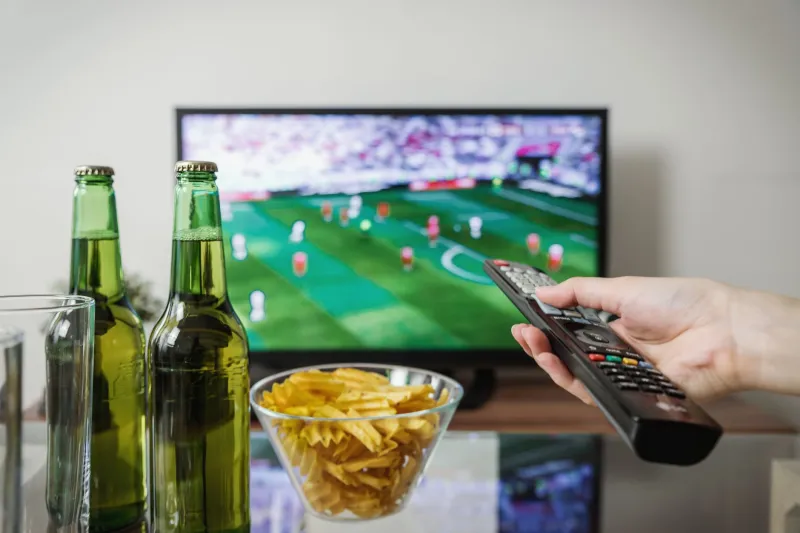
Here's a stat that sounds fake until you think about your own living room: surveys consistently show that more than half of younger American viewers watch most of their content with subtitles on. Not occasionally. Not for foreign-language shows. Most of the time.
If you're over 40, this probably sounds like a generational quirk. If you're under 40, you're probably reading this sentence with captions on anyway. (Hi.)
The question isn't whether subtitles have taken over — they clearly have. The question is what it means when an entire country starts reading its television.
The Perfect Storm of Mumbling
Blame a few converging forces. First, there's the sound mix problem. Somewhere in the last decade, dialogue got buried under explosions, scores, and — let's be honest — a stylistic obsession with realism. Directors want naturalistic performances delivered at a mumble. Sound mixers, working under brutal deadlines, master for theater speakers or expensive soundbars. Your TV's downward-firing speakers don't stand a chance.
Then there's the acting. Method performances have drifted toward a whispered, teeth-clenched register that reads as serious on set and sounds like static at home. 'Succession' built a family dynasty on characters who refuse to finish sentences. 'The Batman' opened with a monologue so murky that even critics joked about needing captions for an English-language film.
And of course, there's 'Squid Game.' Netflix's Korean juggernaut didn't just prove subtitles were no barrier to a global hit — it made reading your TV a badge of cultural fluency. Suddenly, the red bar at the bottom of the screen wasn't a crutch. It was how people watched.
From Accessibility to Aesthetic
Here's the twist worth sitting with: the subtitle boom started as an accessibility win and hardened into a habit.
The 'Sound of Metal' era deserves real credit. That film's Oscar-winning sound design, built around a drummer losing his hearing, put deaf and hard-of-hearing experiences at the center of a mainstream conversation. Open captions, once a niche request, became something cinephiles actively sought out at theaters. Streaming platforms noticed and made captions easier to toggle than ever — one click, synced, styled to match your show.
Once a feature is that frictionless, it stops being a feature and starts being a default. Ask any Gen Z viewer: captions aren't compensating for anything. They're part of the experience, the same way a second screen is. Many report that they prefer reading dialogue — it catches names, foreshadowing, and throwaway lines that ears would miss.
What Happens to Storytelling When Everyone Reads?
This is where it gets interesting for anyone who cares about how stories are built.
Dialogue that's meant to be heard — timing, pauses, a voice cracking — reads differently on the page. A whispered confession loses its intimacy when it arrives as white text on black. Writers and directors are now creating work for an audience that may experience half of it visually-as-text. Some lean in, packing captions with jokes and easter eggs. Others worry that the emotional texture of performance is getting flattened into subtitles nobody feels.
And the mix problem isn't fixing itself. Studios have started releasing 'optimized' audio modes and clearer-dialogue settings, which is both a genuine improvement and a quiet admission: we mixed it badly, here's a patch.
The New Normal
So are captions the new default? The evidence says yes — and honestly, it's fine. Accessibility features becoming universal features is how progress usually works. Curb cuts help everyone. So do subtitles.
But the industry should pay attention to why, not just what. Americans didn't start reading their TV because they love reading. They started because the sound mix broke, the acting went quiet, and the global catalog exploded. Fix the first two and the third becomes a genuine choice rather than a necessity.
Until then, the subtitle generation will keep watching — I mean, reading — every single thing you make.