Twelve Seats, One Remote: How the Private Screening Room Became America's Coziest Status Symbol
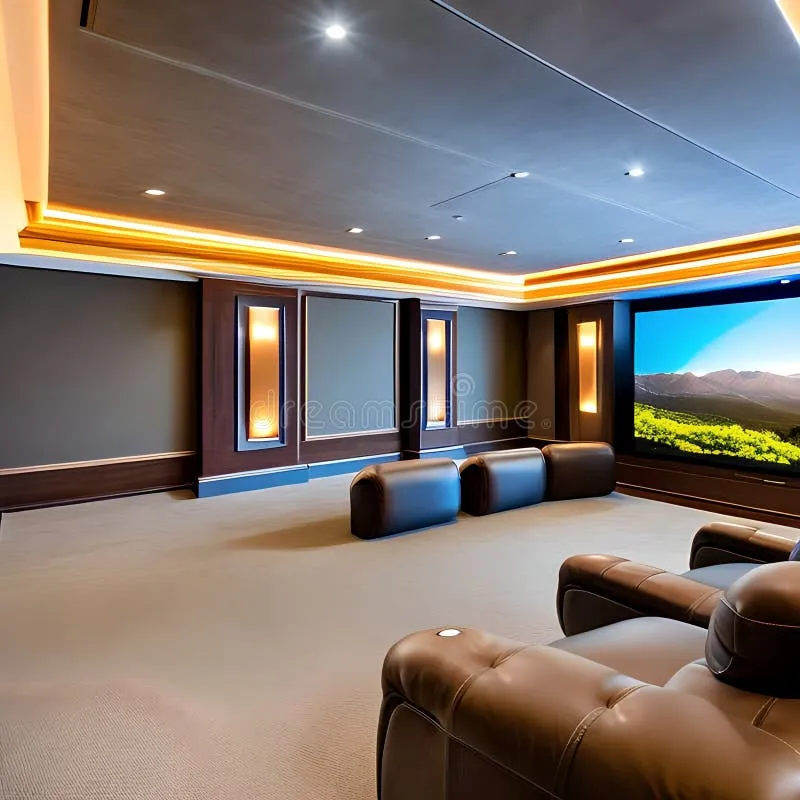
Photo: luxury home theater room with projector screen and recliner seats, via thumbs.dreamstime.com
There's a moment happening in finished basements across America right now. The lights dim — not from a switch, but from a scene preset someone programmed on a tablet. The screen drops down or flickers on, all 120 inches of it. The recliners hum into position. And the person who built this room, who spent somewhere between $15,000 and $150,000 getting here, finally presses play.
Nobody's checking their phone. Nobody's kicking the seat. Because there are no other seats.
The Multiplex, Minus the Public
The numbers tell a strange story. While theatrical box office receipts continue their slow, uneven recovery from the pandemic years, the home theater industry has been quietly booming. AV installation companies that once catered to tech enthusiasts now have waitlists. Soundproofing suppliers can barely keep acoustic panels in stock. And a new breed of business — the private screening room you rent by the hour — has gone from novelty to legitimate weekend plan in cities from Austin to Chicago.
Walk into one of these micro-cinemas and you'll find something between a luxury lounge and a very committed fan's den: a dozen leather seats, a projection setup that would embarrass your local mall theater, a concession area you're allowed to raid at will, and a Bluetooth speaker in the lobby for the pre-movie hang. Rates typically run $75 to $250 an hour depending on the city and the fancy-ness of the room. Bring your own movie on a drive, or stream it. Some spots even let you book back-to-back blocks for marathon sessions of the Lord of the Rings extended editions, which is exactly the kind of thing Americans are doing with them.
Who's Building This Stuff?
The customer base splits into two camps. First, the true believers: homeowners commissioning dedicated theater rooms with tiered seating, star ceilings (yes, fiber-optic constellations in your drywall), and Dolby Atmos speaker arrays. Contractors report that these builds often start as "just a big TV" requests and balloon once clients see a demo room. It's the man-cave phenomenon with a film degree.
The second camp is more interesting economically: people who will never build anything but will absolutely pay $150 to control an entire theater for a night. Birthday parties. Proposal screenings (someone's going to say yes in the dark, it happens weekly). Fantasy football drafts projected on a 20-foot screen. Groups of friends who got priced out of caring about opening-night crowds and realized that for the cost of six tickets plus concessions at a multiplex, they could have the whole room to themselves.
Why the Market Moved Home
The pandemic didn't invent this — it accelerated it. Studios trained audiences that new releases could arrive at home simultaneously with theaters, and a chunk of that habit stuck. But the deeper shift is about control. The modern moviegoer has been asked to accept a lot: variable ticket pricing, 25-minute preshow ad blocks, projection issues nobody fixes mid-film, and a general erosion of the unwritten theater contract. The private screening room is a response to all of it. You pick the film. You pick the volume. You pause for a bathroom break without missing anything.
There's a social angle too. The private screening room has become a venue the way rented cabins and karaoke rooms are venues — a container for a hangout that happens to have a movie in it. That's a genuinely new use case for cinema, and it's one the traditional theater industry is only starting to notice.
The Cineplex Isn't Dead. It's Just Not the Only Stage Anymore.
None of this means the big theatrical experience is doomed. Dune-scale spectacle still belongs on a 70-foot screen, and studios know their biggest releases are events that demand crowds. But the middle of the market — the comedies, the mid-budget dramas, the comfort rewatches — is migrating to rooms like these, one basement and one hourly rental at a time.
The future of moviegoing, it turns out, might not be a choice between the multiplex and the couch. It might be a third thing: a private room, twelve friends, total control, and a popcorn machine that's included in the price. That's not the death of cinema. That's cinema learning to be intimate again.