Projectors, Panels, and a Second Mortgage: Inside America's Living Room Arms Race
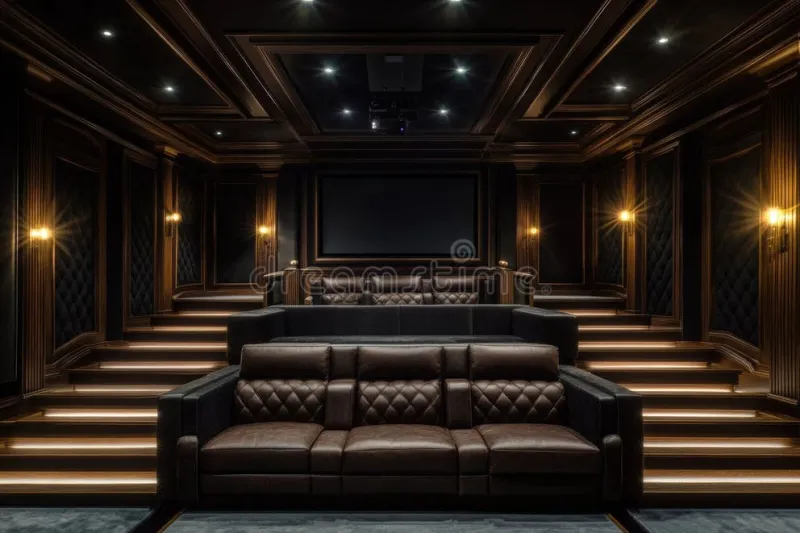
Photo: luxury home theater room with projector screen and tiered seating, via thumbs.dreamstime.com
There was a time when the fancy guy on your block had a big TV. A 55-incher, maybe, mounted proudly above the fireplace, and everyone quietly agreed it was a bit much.
That guy is extinct. His replacement has a 120-inch ambient-light-rejecting screen, a laser projector hanging from the ceiling, seven channels of amplification, and a dedicated rack in the closet humming with equipment that costs more than a used Honda Civic. And here's the thing — nobody's laughing anymore.
The Numbers Don't Lie (But They Do Stagger)
The home theater market in the US has been on a tear since 2020, and it never really cooled down. What started as pandemic panic-buying — remember when everyone suddenly needed a projector because the theaters were shuttered? — evolved into something more deliberate. More competitive.
Walk into any CEDIA expo or scroll the r/hometheater subreddit and you'll find Americans treating their media rooms like a craft. We're talking about acoustic panels disguised as art, tiered seating platforms built into the subfloor, star-field ceilings, and bass isolation systems so their neighbors don't file complaints. Entry-level 'serious' setups start around $5,000. The ceiling? There isn't one, which is sort of the point.
The interesting part isn't the spending. It's the why.
When the Theater Came to You (and Stayed)
For decades, the logic was simple: theaters got the good stuff first, and home viewing was the compromise. Smaller screen, compressed audio, distractions, phone notifications. You watched movies at home; you experienced them at the cinema.
That logic is crumbling, and it's crumbling from both directions.
From one side, the tech finally caught up. OLED and micro-LED displays deliver black levels that make multiplex projectors look washed out. Dolby Atmos has trickled down to soundbars that can fake a room full of speakers. Consumer projectors hit brightness and contrast levels that would've been flagship commercial gear five years ago. The physical gap between 'living room' and 'theater' has narrowed from a canyon to a curb.
From the other side, the theatrical experience itself has gotten more complicated. Ticket prices keep climbing. Premium formats like IMAX and Dolby Cinema cost extra on top of that. And the window between theatrical release and streaming debut keeps shrinking, which trains audiences to wait. Why fight for parking on opening night when the movie lands on your TV in six weeks?
For a growing slice of the population, the answer is: don't wait. Build the room instead.
The Flex That Keeps Getting Quieter
Here's what makes the modern home theater such a fascinating status symbol: it's the opposite of loud luxury. Nobody walking past the house can see it. There's no badge on the grille (well, unless you spring for the Klipsch or B&W ones). It's a status symbol you have to be invited into.
That's a very American kind of flex in 2024. Not 'look what I have' but 'come over Sunday, we're doing Oppenheimer on the big screen with the good speakers, and I made nachos.' It's experiential wealth — money spent on how you feel in a room rather than what people see from the street.
The industry has noticed. Projector brands that used to sell exclusively to integrators now advertise during NFL games. Furniture companies have entire 'media room' lines. Costco, the great American retail barometer, routinely stocks 100-inch+ screens and sells out of them before the Super Bowl.
Is the Living Room the New First-Run Venue?
Studios are quietly hedging. Day-and-date streaming releases, premium VOD windows, and direct-to-streaming 'event films' all treat the home as a legitimate first-run venue, not a consolation prize. Meanwhile, theaters fight back with recliners, beer, and 70mm event screenings — leaning hard into the one thing a living room can't replicate: the crowd, the scale, the commitment.
And that's the honest answer to whether the living room is 'replacing' the cinema. It isn't. It's splitting the job.
The theater is becoming the special occasion — the concert venue of film. The home theater is becoming the daily driver, the place where most actual viewing happens, and increasingly the place where it happens well. The multiplex owns the premiere. Your basement owns everything else.
For the people building these rooms, that's not a downgrade. It's the whole point. The best seat in the house is the one you own, calibrated to your eyes, with a pause button and your own snacks.
The guy with the 55-inch TV above the fireplace wouldn't recognize the place. His successor doesn't miss him.