Half-Watching Everything: How the Second Screen Stole the Show
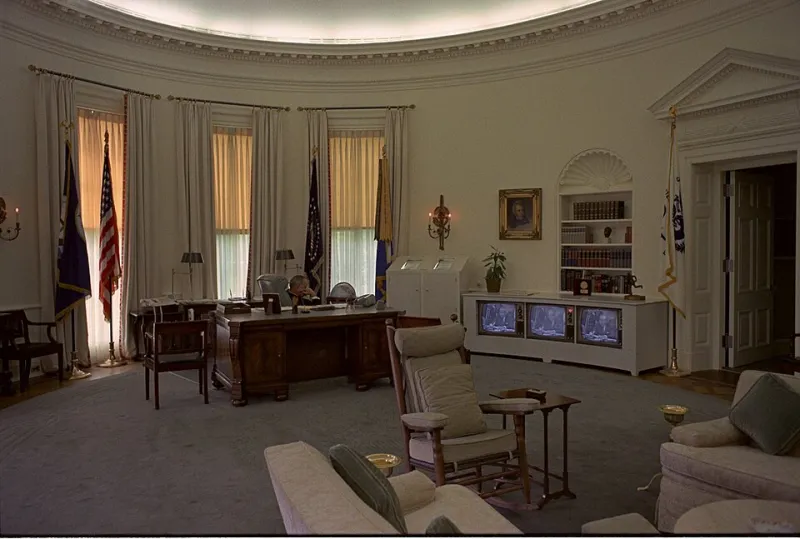
Photo: Yoichi Okamoto, Public domain, via Wikimedia Commons
Picture the scene: the lights are low, the TV is on, and you are — in the loosest possible sense of the word — watching something. Technically your eyes are pointed at the screen. But your phone is also in your hand, a Reddit thread about the show is loading, and you just missed the single most emotionally devastating moment of the entire season because you were checking whether someone replied to your Instagram story.
Welcome to the second-screen trap. It's not new, exactly, but it's gotten worse — and the way it's tangling up with how stories are actually told on streaming platforms is something the industry is only beginning to reckon with.
The Loop Nobody Designed (Or Did They?)
Here's the uncomfortable question at the center of all this: is fractured attention an accidental side effect of living in a hyper-connected world, or is it something that platforms have quietly learned to exploit?
The honest answer is probably both, and that's what makes it so hard to untangle.
Social media apps are engineered around variable reward — the same psychological mechanism that makes slot machines compelling. You scroll not because you expect something great, but because maybe something great is coming. Apply that same logic to watching TV, and suddenly checking your phone during a slow scene isn't laziness. It's your brain doing exactly what it's been trained to do.
Streaming platforms, meanwhile, have spent years studying drop-off points — the exact moments when viewers stop watching or switch to something else. They know, down to the second, when your attention drifts. And rather than fighting that drift, some shows have started designing around it. Faster cold opens. More frequent cliffhangers. Shorter episodes with less breathing room between plot beats.
The result is a feedback loop where distracted viewing shapes content, which shapes viewing habits, which shapes content again. Round and round.
What We Lose When We Half-Watch
There's a real cost here, and it goes beyond just missing plot details you have to Google later.
The shows that tend to hit hardest — the ones people talk about for years — are almost always built on subtlety. A glance between characters. A piece of score that shifts in a way you'd only catch if you were paying attention. A visual callback to something that happened three episodes ago. That's the stuff that makes prestige TV feel like more than just content. It's the craft underneath the plot.
When you're half-watching, you're essentially skimming a novel. You get the broad strokes. You follow what happens. But the texture is gone, and with it, a lot of the emotional payoff that makes great storytelling genuinely affecting.
Ask anyone who binged The Bear while simultaneously scrolling through TikTok and they'll tell you they liked it. Ask someone who watched it with their phone in another room, and you'll get a very different conversation.
The Live TV Exception (And What It Tells Us)
Interestingly, there's one context where second-screen behavior actually enhances the experience rather than fragmenting it: live events.
When the finale of a buzzy show drops, or when a prestige drama airs its most anticipated episode, social media doesn't compete with the screen — it becomes an extension of it. The collective commentary, the real-time reactions, the memes that appear before the credits finish rolling — that's a different kind of engagement. It's communal rather than distracting.
This is probably why live sporting events and award shows have held up better than almost anything else in an era of fragmented attention. The second screen is the experience in those contexts. You're not distracted from the event; you're participating in a distributed conversation about it.
The challenge for scripted drama and serialized storytelling is that the same dynamic doesn't translate cleanly. A spoiler tweet isn't community — it's a wrecking ball aimed at the exact emotional architecture the writers spent months building.
Are Creators Adapting or Surrendering?
There's a growing divide in how showrunners are responding to this reality, and it's starting to show up in the work itself.
On one side, you have creators who are explicitly designing for distraction — leaning into rapid pacing, high-concept hooks, and the kind of plot mechanics that work fine even if you only catch 70% of a scene. This isn't necessarily a bad thing. Some of the most entertaining TV of the last few years has been built on this model. But there's a ceiling on how deep it can go emotionally.
On the other side, you have a smaller group of creators who are essentially pushing back — making slower, denser work that requires your full attention and trusts that the audience willing to give it will find the show eventually. This is a bit of a gamble in a streaming landscape where first-episode drop-off rates determine whether a series gets renewed or quietly disappears, but it's a principled one.
The most interesting cases are the shows trying to do both — building in enough immediate momentum to hook distracted viewers while rewarding the people who are actually paying close attention with a richer layer of meaning underneath. It's genuinely difficult to pull off, and when it works, it feels like a minor miracle.
The Audience Side of the Equation
It would be easy to frame all of this as something being done to viewers — platforms designing for distraction, algorithms hijacking attention — and there's truth in that. But it's also worth being honest about the fact that audiences are active participants in this dynamic.
The second screen offers something TV alone often doesn't: the feeling of being part of a conversation in real time. Watching a show in isolation, even a great one, can feel weirdly lonely in an era when everything is designed to be shared. Pulling out your phone is, in part, a social impulse — a way of connecting the private experience of watching to a larger public one.
That's not a character flaw. It's a reasonable response to how entertainment has evolved. But it does mean that some of the responsibility for reclaiming focused attention sits with viewers, not just platforms.
Turning off notifications for an hour isn't exactly a radical act. But in 2024, it kind of feels like one.
What Comes Next
The second-screen problem isn't going away. If anything, as more platforms integrate social features directly into the viewing experience — live comment feeds, synchronized group watches, in-app reactions — the line between watching and scrolling is going to get even blurrier.
The question isn't whether distraction will remain part of how we consume entertainment. It will. The question is whether storytellers can find ways to make the pull of the screen strong enough to compete — or whether the most immersive, demanding narratives will become a niche experience for the rare viewer willing to put the phone down and actually show up.
For what it's worth, the best TV moments of the last decade — the ones people still argue about, still rewatch, still feel — almost all have one thing in common: they hit hardest when you were paying attention. That's not a coincidence. That's the whole point.