Check-Out Line Nostalgia: What It Costs to Actually Own the Shows You Grew Up On
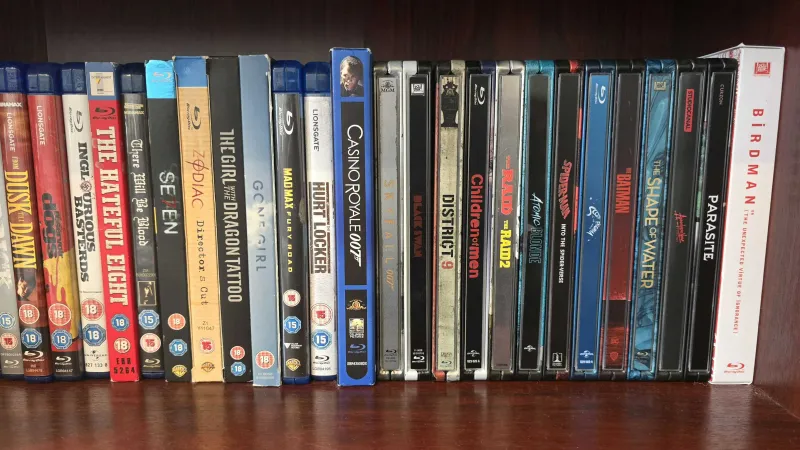
Photo: stack of DVD and Blu-ray cases next to streaming remote on coffee table, via cdn.mos.cms.futurecdn.net
Let me tell you about the great Friends migration of the early 2020s, because it's the blueprint for everything wrong with how we access the past. For years, the show lived on one streamer. Then a rival paid a reported nine figures to move it. Fans followed. Then it drifted again. Each hop, someone's comfort show — the thing they put on after a bad day at work — simply stopped existing where they could reach it.
Nobody lost a copy of Friends. It's one of the most-watched shows in television history. But in the streaming era, availability is a lease, not a deed, and leases don't renew.
The Rotating Door of Licensing Limbo
Here's the machine, simplified: a studio owns a show, a platform licenses it for a period of years, and when the contract expires, the show can vanish overnight or get snatched up by whoever writes the bigger check. There's no notification. No funeral. One day the thumbnail is there; the next, your autocomplete history points at a ghost.
The past decade gave us a whole museum of these disappearances. Sitcoms that lived on three different services in three years. Cartoon catalogs that evaporated as consolidation swallowed them up — shows pulled not because anyone stopped liking them, but because a parent company would rather you not watch a rival's library at all. Entire blocks of '90s and 2000s programming spent years in purgatory, available only through grainy YouTube uploads and a DVD player gathering dust in a closet.
Some came back remastered, looking better than they ever did on a tube TV. Some came back edited. Some are still out there, somewhere, in the wind.
The Remaster Bait-and-Switch
The cruelest part? Sometimes the thing comes back worse. Licensing deals get rushed, and classics resurface with cropped aspect ratios, compressed audio, or — the true crime — replaced music, because the original soundtrack's licensing lapsed. You press play on the show you loved and it's wearing someone else's clothes.
This is where the nostalgia contract starts to feel one-sided. You're not renting a show; you're renting a memory, and the landlord can renovate it without asking.
The Disc Is Dead, Long Live the Disc
And so we arrive at a genuinely strange cultural moment: physical media is back, at least among people who've been burned. Sales of Blu-rays and 4K discs have declined for a decade overall, but the collector's market is thriving. Boutique labels — Criterion, Arrow, Shout! Factory and their ilk — have built loyal followings by doing one thing streamers can't: guaranteeing the thing stays the thing. Unedited. Un-cropped. With the original music. Forever, or at least until the disc scratches.
Digital purchases are the middle path, and a shakier one than people assume. Buy a season on a major storefront and you've bought a license to access, revocable in ways nobody reads the fine print about. It's better than a subscription. It is not ownership, no matter what the button says.
So What Do You Actually Do?
A practical roundup, for those keeping score at home:
- For the shows you genuinely love: buy the disc when one exists. It's the only format where the studio can't reach in and edit your childhood.
- For casual rewatches: let the subscriptions rotate. Binge during the month it's available; cancel without guilt.
- For the truly lost: keep an eye on boutique reissue announcements. The licensing purgatory does end, eventually, and it usually ends on a shelf, not a menu.
The uncomfortable truth is that streaming taught us convenience and charged us ownership. The rebound we're seeing — discs on wishlists, digital purchases, even the humble local library's DVD section — is really just people renegotiating the deal.
Your memories were never the streamer's to lease. It just took the third platform hop to prove it.